Ghamasaan Review: Tigmanshu Dhulia’s Crime Saga Burns Bright Then Fades
Tigmanshu Dhulia returns to the rugged terrain of the Hindi heartland with Ghamasaan, a crime drama steeped in gangsters, guns, caste equations and political power. Streaming on ZEE5 from September 11, 2026, the film reunites the director with the kind of dusty, morally murky world that defined earlier works such as Paan Singh Tomar. Yet while the film arrives with strong atmospheric intent and notable performances, an overstuffed narrative prevents it from landing with the force it promises.
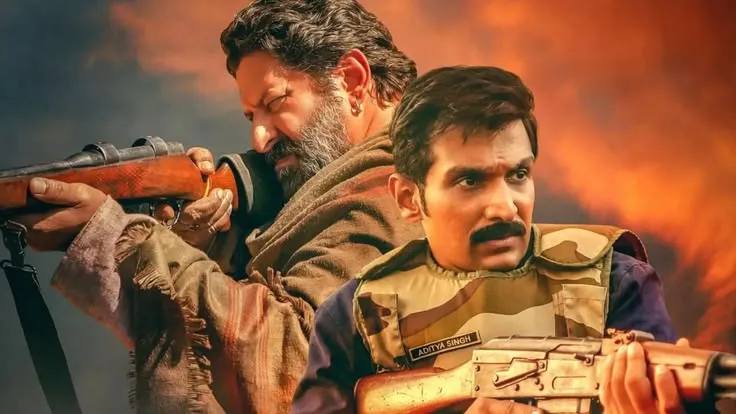
The story centres on a tense cat-and-mouse confrontation set in the arid landscapes of Bundelkhand in the mid-2000s. Arshad Warsi plays Maharaj, a feared dacoit whose influence extends deep into local politics and the police machinery. Opposite him is Pratik Gandhi as Aditya Singh, an IPS officer tasked with dismantling the outlaw’s network. Rajpal Yadav appears as Kalika, a colourful figure whose presence adds both levity and unexpected depth. Ishita Dutta plays Aditya’s wife, offering brief glimpses of the personal cost of the officer’s mission.
Atmosphere and Ambition
Dhulia has long specialised in stories rooted in the hinterland, where the lines between law, crime and political expediency blur. Ghamasaan leans into that tradition with confidence. The production design, local dialect and cinematography create a lived-in sense of place. Violence feels ordinary rather than spectacular, and the film refuses to romanticise its outlaw. Maharaj is portrayed as ruthless and self-preserving rather than a folk hero, a choice that grounds the drama in a harsher realism.
The early portions establish the web of power that allows Maharaj to operate with near impunity. Villagers live in fear, local authorities look the other way, and political calculations keep the system intact. Aditya’s arrival as an outsider determined to enforce the law sets up a classic confrontation between institutional order and entrenched lawlessness. The film’s strongest stretches come when it simply observes this world without rushing toward resolution.
Performances That Carry the Weight
Arshad Warsi delivers one of the film’s most compelling turns. Cast against the comic image many still associate him with, he brings a quiet menace and unpredictability to Maharaj. The performance avoids easy theatrics, relying instead on presence and controlled intensity. Rajpal Yadav proves equally effective, injecting both humour and pathos into his role. Several reviewers have singled out his contribution as a highlight, particularly in the later stages of the story.
Pratik Gandhi plays Aditya with restraint. The officer is methodical and focused rather than a swaggering action hero. His understated approach suits the film’s grounded tone, though the character sometimes feels underdeveloped in comparison to the larger-than-life antagonist. Supporting players, including those portraying villagers and political figures, add texture to the ensemble.
Where the Narrative Loses Focus
Despite its strengths, Ghamasaan struggles to maintain dramatic coherence across its length. The screenplay introduces multiple threads—political intrigue, personal relationships, caste dynamics and the mechanics of the police pursuit—without always giving them sufficient room to breathe. The result is a film that feels overstuffed. Key relationships, including Aditya’s marriage, are sketched rather than fully explored. Emotional stakes remain secondary to the procedural momentum of the hunt.
The climax, in particular, has drawn mixed responses. While the final confrontation carries visual and thematic weight, some critics note that it arrives in a hurried fashion and lacks the emotional payoff the earlier sections seem to promise. The film understands the world it wants to portray but does not always decide which elements deserve sustained attention. Atmosphere and ambition are abundant; a clear dramatic centre proves more elusive.
Technical Craft and Tone
Technically, the film holds steady. Cinematography captures the harsh beauty of the Bundelkhand landscape, while the background score draws on folk elements that reinforce the regional setting. Action sequences are staged with a certain grit rather than glossy spectacle. Dhulia’s direction remains confident in its refusal of mainstream flourishes—there is little of the song-and-dance excess that often dilutes heartland stories in commercial cinema.
Yet the very density of the material works against the film at times. Scenes that could deepen character or sharpen thematic points are sometimes truncated as the narrative presses forward. The socio-political observations, while present, function more as texture than as fully developed argument.
Overall Impression
Ghamasaan is a film of considerable atmosphere and strong individual performances. Arshad Warsi and Rajpal Yadav, in particular, leave lasting impressions. The return of Tigmanshu Dhulia to this genre of storytelling is welcome, and the film’s refusal to sentimentalise its criminals feels honest. At the same time, the overstuffed structure and uneven dramatic focus keep it from achieving the impact its premise and craftsmanship suggest.
Viewers drawn to gritty, grounded crime dramas set in the Hindi heartland will find much to engage with. Those seeking a tighter emotional through-line or a more decisive climax may leave feeling that the film’s fire ultimately dissipates into smoke. Ghamasaan burns brightly in stretches, yet it never quite settles into the sustained intensity its world and characters deserve.
Read more – theantutuscore.com