Takeshi Okada Resigns as Japan FA Vice President Over FIFA Re-Election Politics
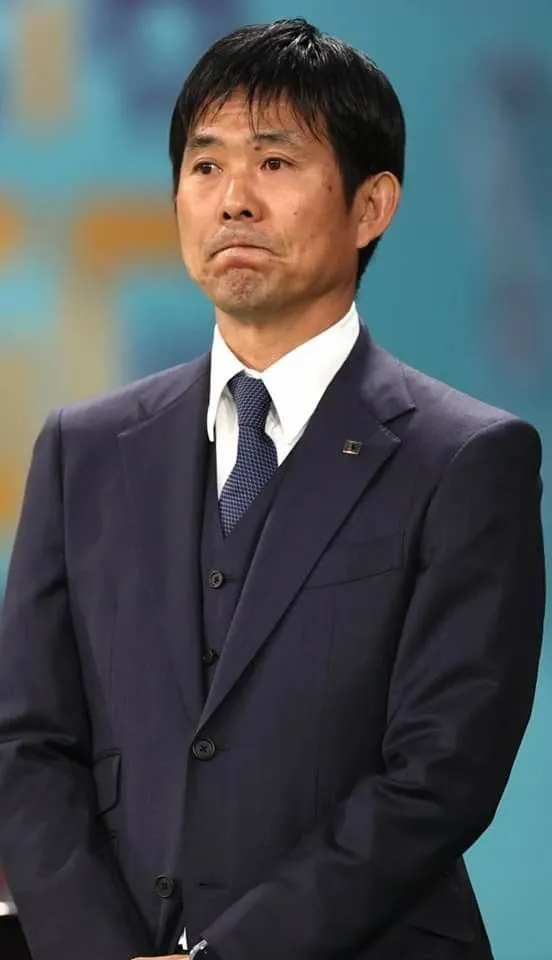
Takeshi Okada, the former Japan national team coach and vice president of the Japan Football Association, has resigned from his position in protest at the politics surrounding Gianni Infantino’s campaign for re-election as FIFA president. The decision, announced by the JFA, stems from Okada’s conviction that recent developments around FIFA and the World Cup conflict with the principle that sport must be guided by integrity.
A Coach’s Career Built on Values
Okada coached Japan at the 1998 and 2010 FIFA World Cups. His long involvement in Japanese football has been marked by a consistent emphasis on the social role of sport. In his resignation statement, he explained that throughout his career he had valued the idea that sport should embody integrity and carry social significance. He described the series of actions and responses surrounding the most recent World Cup as representing a significant divergence from those personal convictions. As a sportsman, he said, he could not accept them.
The resignation was presented as entirely voluntary and the result of careful deliberation. Okada made clear that he understood the practical considerations facing Japanese football. Given the relationship with the Asian Football Confederation and the potential impact on the domestic game, he acknowledged that there were reasons for aligning with the AFC’s position. Nevertheless, he chose to step down rather than remain in a role that required him to accept developments he found incompatible with his beliefs.
The AFC’s Shift and the Wider Context
The timing of the resignation is significant. It came approximately one week after AFC president Sheikh Salman bin Ibrahim Al Khalifa publicly declared support for Infantino’s re-election bid at an extraordinary congress held in Tokyo. That endorsement marked a sharp change from the confederation’s stance three months earlier. At that time the AFC had joined football bodies from Europe and North America in criticising FIFA over the abandoned FIFA Forward Enterprise proposal, which sought to open stakes in FIFA’s premium competitions, including the World Cup, to private investors. The AFC had described the plan as a fundamental breach of trust.
Infantino has led FIFA since 2016 and is seeking a further term in the presidential election scheduled for March. Support from Asia, one of the largest voting blocs within FIFA, is widely regarded as important to his campaign. The sudden shift by the AFC therefore carried considerable political weight inside world football’s governing structures.
Integrity Versus Institutional Alignment
Okada’s departure highlights a tension that frequently arises in international sports governance. National associations and continental confederations must balance principles with practical realities of influence, funding and future hosting opportunities. Japan has long-term ambitions in the global game, including the possibility of hosting a World Cup before 2050. Aligning with the regional confederation can be seen as a pragmatic step in that context.
Yet Okada’s statement framed the issue differently. For him the cumulative responses to controversies linked to the World Cup had moved too far from the ethical standards he considered essential. By resigning, he placed personal conviction above institutional continuity. His action does not appear to have been coordinated with a broader public campaign; rather it stands as an individual expression of dissent from within one of Asia’s most respected football administrations.
Broader Implications for FIFA Politics
The episode occurs against a backdrop of ongoing debate about FIFA’s direction under Infantino. The collapsed private investment plan generated significant criticism and forced an apology from the president. Questions about governance style, political relationships and the commercialisation of the World Cup have continued to surface. While some associations have maintained or restored support, others have voiced reservations.
Okada’s resignation adds a notable Asian voice to the discussion. It demonstrates that even within a confederation that has formally backed the incumbent, individual leaders may draw different conclusions about where the boundaries of acceptable conduct lie. The fact that a figure of Okada’s standing and experience felt compelled to leave his post underscores the depth of the concerns for at least some within the Japanese football community.
The Role of Personal Standards in Sports Leadership
Sports administrators often operate at the intersection of competition, commerce and politics. Maintaining a consistent ethical position can become increasingly difficult as the scale and financial stakes of global events grow. Okada’s career trajectory, from national team coach to senior federation official, gave him a vantage point from which to observe these pressures closely. His decision suggests that for some leaders the gap between stated values and observed practice eventually becomes unsustainable.
By stepping aside, Okada has removed himself from the internal decision-making processes of the JFA at a moment when alignment with the AFC appears to be the prevailing institutional choice. Whether his departure prompts further reflection inside Japanese or Asian football remains to be seen. What is already clear is that a senior figure with a strong personal reputation has chosen principle over position.
Looking Ahead
Infantino’s re-election campaign will continue toward the March vote. Continental confederations and national associations will weigh their options in light of development funding, tournament hosting prospects and governance concerns. Okada’s resignation serves as a public marker that not every official is prepared to set aside reservations about the direction of the organisation.
For Japanese football the immediate task is to fill the vacant vice-presidential role and maintain continuity in its domestic and international programmes. For the wider football community the episode offers a reminder that integrity remains a contested and closely watched standard. When experienced leaders conclude that recent events have crossed a personal line, the resulting resignations become part of the broader conversation about how the game is governed and for whose benefit.
Okada’s statement was measured rather than accusatory. He did not name individuals or issue demands. Instead he simply recorded that the cumulative responses surrounding the World Cup had diverged too far from the values that had guided his career. In doing so he placed the question of integrity back at the centre of discussion at a time when political calculations around FIFA’s leadership appear to be intensifying.
Read more – Aeshikshakosh.com