How to Avoid Tourist Traps While Traveling: Smart Strategies for Authentic Experiences
Traveling opens doors to new cultures, landscapes, and memories, yet many journeys become disappointing due to overcrowded sites, overpriced services, and inauthentic encounters. Tourist traps—places or experiences designed primarily to extract money from visitors—diminish the joy of exploration. Fortunately, thoughtful planning and mindful choices enable travelers to sidestep these pitfalls and discover genuine local life.
This guide offers practical, effective strategies for identifying and avoiding common traps while embracing rewarding alternatives. From research to on-the-ground decisions, these tips empower anyone to craft more meaningful adventures.
Research Thoroughly Before Departure
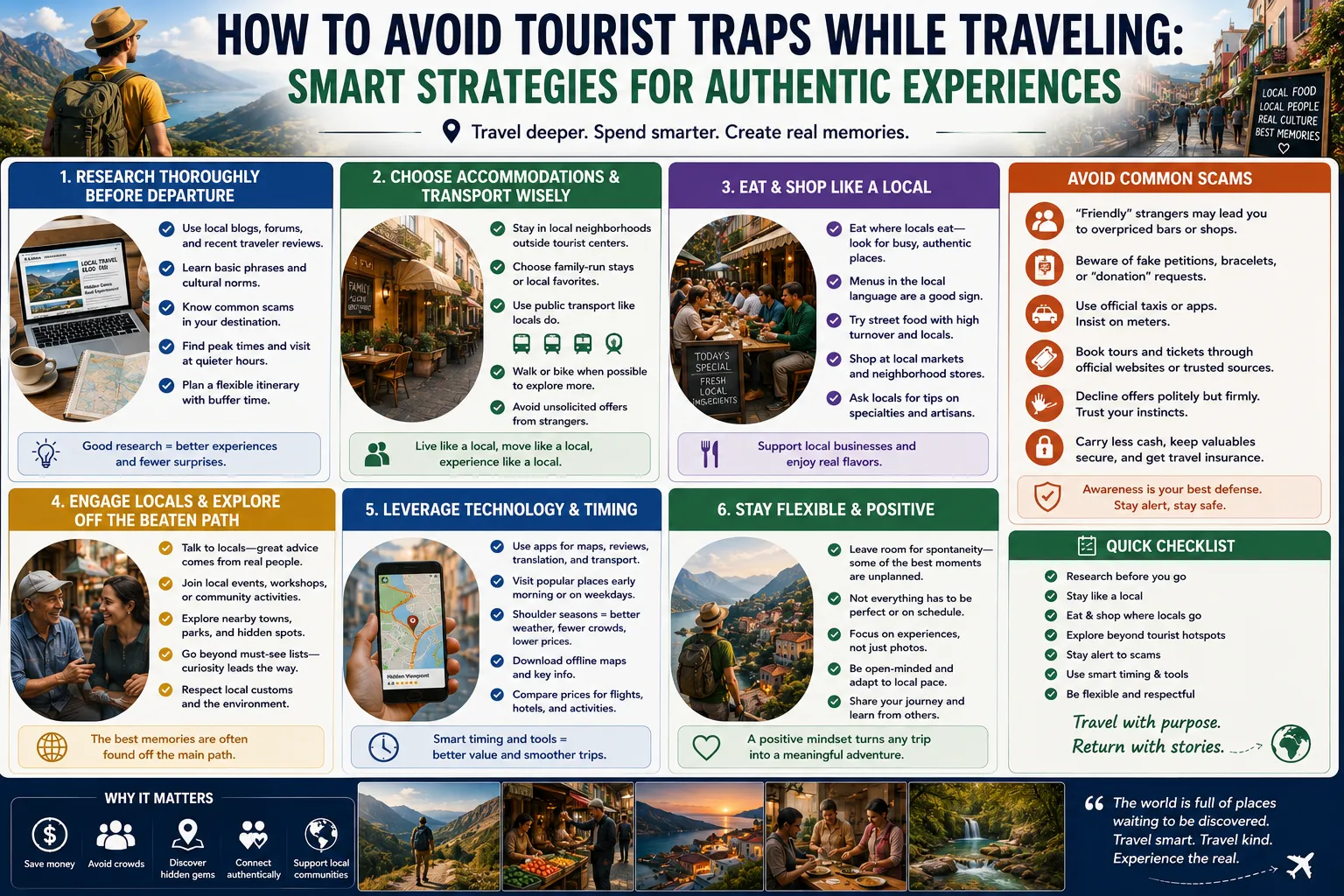
Effective avoidance begins with preparation. Investigate destinations using diverse sources beyond mainstream guides, focusing on local blogs, forums, and recent traveler accounts for insights into overhyped spots. Identify peak visiting hours for major attractions and plan visits during quieter times, such as early mornings or late afternoons.
Learn basic phrases in the local language and understand cultural norms to navigate interactions confidently. Review common scams specific to regions, such as overpriced taxis or fake tour operators, to stay vigilant. Creating a flexible itinerary with buffer time allows spontaneous discoveries away from crowded routes.
Apps and maps help locate lesser-known alternatives, but cross-reference with community recommendations for reliability.
Choose Accommodations and Transport Wisely
Stay outside central tourist zones when possible. Neighborhoods slightly removed from landmarks often provide authentic atmospheres, better value, and easier access to local eateries. Opt for family-run guesthouses or properties frequented by residents rather than chain hotels clustered in busy districts.
For transportation, favor public systems like buses, trains, or metro lines used by locals over tourist-oriented options. Ride-sharing apps or official taxis with meters reduce risks of inflated fares. Walking or cycling in safe areas reveals hidden gems while offering immersive perspectives.
Avoid unsolicited offers from strangers at transport hubs, a frequent starting point for scams.
Eat and Shop Like a Local
Restaurants with prominent English menus, large photos, or aggressive touts frequently prioritize tourists over quality. Instead, seek establishments filled with residents, or follow the “menu in local language only” rule. Street food stalls with high turnover and local clientele often deliver fresh, affordable meals.
For shopping, bypass souvenir stalls near attractions in favor of markets or neighborhood stores. Ask locals for recommendations on regional specialties or artisans. Negotiate politely where customary, but recognize fixed prices in many places. Supporting small businesses fosters genuine connections and contributes to communities.
Engage with Locals and Explore Off the Beaten Path
Conversations with residents yield invaluable advice on worthwhile experiences. Strike up discussions in cafes, parks, or markets—people often share favorite spots overlooked by guidebooks. Joining community events, workshops, or volunteer activities deepens cultural understanding.
Venture beyond famous sites. Nearby towns, parks, or neighborhoods reveal everyday life and unique attractions. Day trips or slow travel pacing uncover regional diversity. Apps highlighting user-generated content help find hidden viewpoints or trails.
Respect local customs and environments to build positive interactions and sustainable tourism.
Recognize and Avoid Common Scams
Awareness prevents most issues. Common tactics include “friendship” approaches leading to overpriced bars, fake petitions, or “helpful” strangers directing to commission-based shops. Decline unsolicited assistance firmly but politely.
Use official booking channels for tours and attractions to avoid counterfeit tickets. Carry minimal cash and secure valuables. Travel insurance provides peace of mind against unexpected problems. Trust instincts—if something feels off, disengage.
Leverage Technology and Timing Strategically
Digital tools enhance smart travel. Translation apps facilitate communication, while review platforms offer balanced perspectives when used critically. Offline maps prevent reliance on potentially manipulated directions.
Timing visits cleverly avoids crowds: early mornings for popular sites or weekdays instead of weekends. Shoulder seasons balance good weather with fewer tourists and lower prices. Flexible dates maximize value and comfort.
Maintain Flexibility and a Positive Mindset
Rigid plans sometimes lead directly to traps. Build adaptability into itineraries to seize unexpected opportunities. Not every experience needs perfection—some “misses” become memorable stories.
Focus on personal enjoyment rather than checking off lists. Documenting authentic moments through journals or photos reinforces fulfillment. Share experiences within travel communities to help others while learning new strategies.
Conclusion
Avoiding tourist traps transforms travel from superficial sightseeing into enriching exploration. Through research, local engagement, wise choices in dining and transport, scam awareness, and flexible timing, travelers access genuine culture and better value.
These strategies require minimal extra effort yet yield substantial rewards in satisfaction and discovery. Embrace curiosity, respect destinations, and prioritize experiences aligned with personal interests. Authentic travel deepens connections to places and people, creating lasting memories far beyond crowded landmarks.
By applying these principles, anyone can navigate the world confidently, turning potential pitfalls into opportunities for meaningful adventure.