US Military Chief: Battlefield Now Extends to the Moon and Cislunar Space
The highest-ranking officer in the United States military has declared that the modern battlefield stretches far beyond traditional domains, reaching all the way to the region around the Moon. Air Force Gen. Dan Caine, Chairman of the Joint Chiefs of Staff, made the statement during a keynote address at the Air, Space and Cyber Conference held outside Washington, underscoring the urgent need for American forces to prepare for operations in what is known as cislunar space.
Expanding the Definition of the Battlefield
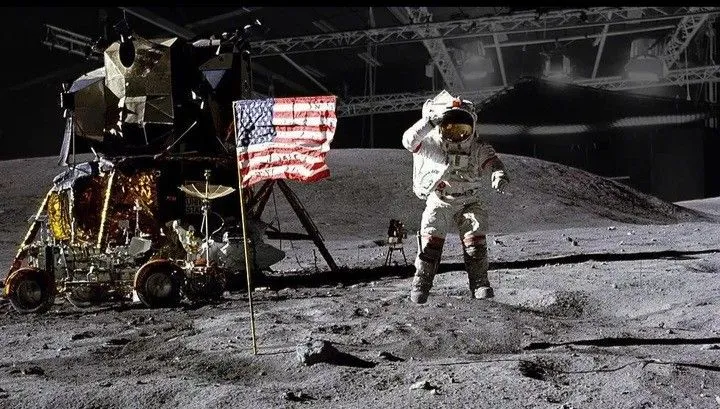
Speaking to an audience of service members and defense industry leaders on September 16, 2026, Gen. Caine emphasized that the joint force must adapt immediately. He stated that the military’s task is to prepare to fight, endure, and win in global contested environments ranging from the seabed to cislunar space. Cislunar space refers to the vast region extending from Earth’s surface outward to and including the area around the Moon.
This framing marks a significant expansion of how military leaders describe the operational environment. Future conflicts, Caine noted, will require forces to operate without the assumptions of uncontested access, secure rear areas, or uninterrupted sustainment. The remarks highlight a shift in strategic thinking as human activity and national interests push deeper into space.
Context of Recent Revelations
Caine’s comments came just days after Air Force Secretary Troy Meink publicly acknowledged for the first time that the United States has fielded on-orbit space control weapons. This disclosure represents a notable step in transparency regarding American capabilities in the space domain and has intensified discussions about the evolving nature of space as a warfighting arena.
The United States Space Force, established in 2019, has been preparing for operations in space and around the Moon. Officials within the service stress that as humanity advances deeper into space, the Space Force’s responsibility is to help defend American interests in these new regions. Potential adversaries, particularly China, are actively pursuing activities in cislunar space, prompting the need for expanded domain awareness and readiness.
Why Cislunar Space Matters
Cislunar space is enormous—far larger in volume than the region closer to Earth that has traditionally received most attention. Military and civilian satellites currently operating in low Earth orbit and geosynchronous orbit provide critical communications, navigation, intelligence, and timing services that underpin modern military operations on Earth. Extending awareness and potential operations farther out addresses growing concerns that competitors could develop capabilities to challenge or disrupt these assets from greater distances.
Space Force leaders have noted that units such as the 18th and 19th Space Defense Squadrons are already sharing responsibilities related to the cislunar mission. This reflects an organizational adaptation to monitor activities beyond traditional orbital regimes. Intelligence assessments indicate that potential adversaries are seeking to extend the reach of warfare into space, necessitating a corresponding response to maintain freedom of action and the ability to project power when required.
Preparing the Joint Force
Gen. Caine’s call focuses on readiness across the entire joint force, not solely the Space Force. He stressed the importance of space superiority and the need to sustain networks, domain awareness, and data advantages essential for success in any future conflict. The Space Force, in particular, must deliver unrivaled capabilities in the space domain both now and in the years ahead.
This preparation involves more than hardware. It requires changes in doctrine, training, organization, and concepts of operations. Forces must be ready to operate in environments where access is contested and sustainment lines are vulnerable. The integration of advanced technologies, including artificial intelligence and improved sensing, is seen as essential to detecting, characterizing, and responding to threats across vast distances.
Broader Strategic Drivers
Military interest in the lunar region is closely tied to broader trends in space exploration and commercial activity. As nations and private entities plan more frequent missions to the Moon and beyond, the strategic value of cislunar space increases. Control of key orbital pathways, awareness of activities near the Moon, and the ability to protect national assets become more important.
Competition in space has intensified in recent years, with multiple countries developing counterspace capabilities. While the 1967 Outer Space Treaty prohibits the placement of nuclear weapons and other weapons of mass destruction in orbit or on celestial bodies, questions remain about conventional systems and the rules governing military activities farther from Earth. American leaders have framed their efforts as defensive and necessary to deter aggression and protect vital interests.
Implications for Future Operations
Looking ahead, the emphasis on cislunar readiness is expected to influence investment priorities, research programs, and force structure decisions. Capabilities for space domain awareness, resilient communications, navigation independent of Earth-based systems, and the ability to operate effectively at greater distances are likely to receive increased attention.
At the same time, officials have indicated that the focus remains on ensuring freedom of action rather than seeking conflict. The goal is to deter potential adversaries by demonstrating the capacity to operate successfully across the full spectrum of the space domain, from near-Earth orbits out to the Moon.
A New Era of Military Thinking
Gen. Caine’s remarks signal that senior leaders view the expansion of the battlefield to cislunar space as a present reality rather than a distant possibility. The combination of technological progress, increasing human presence beyond Earth orbit, and the actions of competitors has made preparation an immediate priority.
American forces are being directed to adapt now so they can fight and win in environments that were once considered beyond the practical reach of military operations. From the depths of the ocean to the region surrounding the Moon, the joint force must be ready for contested conditions that challenge traditional assumptions about access, logistics, and control.
This evolution in thinking reflects the recognition that space is no longer a sanctuary. As activity expands outward, so too does the requirement for military readiness. The statements from the Chairman of the Joint Chiefs of Staff and supporting comments from Space Force leaders underscore a clear message: the United States intends to maintain the ability to protect its interests wherever they extend, including the newest frontier of the modern battlefield.
Read more – sevendollarmiracle.com