Moderna’s Personalised Cancer Vaccine Could Teach the Immune System to Fight Tumours
A New Direction for Cancer Treatment
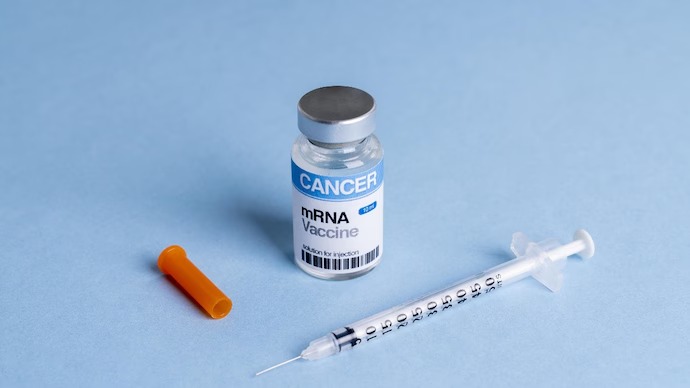
Cancer treatment may be moving toward something much more personal than standard medicines. Moderna and Merck have reported encouraging Phase 3 results from their personalised mRNA cancer vaccine, known as intismeran autogene, for people with high-risk melanoma. The treatment is designed around the genetic features of an individual patient’s tumour rather than using exactly the same vaccine for everyone.
The basic idea sounds surprisingly straightforward, although the science behind it remains highly advanced. Doctors analyse the tumour after surgery and look for mutations that create unusual proteins called neoantigens. These tumour-specific features can act like identifying marks, giving the immune system something more precise to recognise and attack. Moderna describes the approach as an individualised neoantigen therapy because each treatment is designed around the cancer fingerprint of one patient.
The Vaccine Starts With Tumour DNA
A personalised cancer vaccine cannot simply be taken from an ordinary vaccine shelf. Each patient’s tumour needs to be studied first because cancers contain different genetic mutations from one person to another. Researchers sequence tumour material and compare the genetic information with healthy tissue to identify mutations that may produce useful targets for immune cells.
Those selected mutations then help researchers design the mRNA instructions used in the personalised treatment. The mRNA essentially provides temporary instructions that allow cells to produce selected tumour-related proteins. The immune system can then learn that these proteins are unusual and potentially dangerous.
This approach is different from traditional vaccines that prepare the immune system against an infectious organism. Instead, the cancer vaccine is attempting to expose the immune system to features found specifically on tumour cells. Moderna says these mutations can create neoantigens that form a unique fingerprint for an individual cancer.
Teaching Immune Cells What Matters
The important part of the treatment involves the body’s own immune defence system. Cancer cells can sometimes avoid immune detection or create an environment that makes immune attacks less effective. A personalised vaccine aims to improve recognition by showing immune cells which tumour features deserve attention.
Once the vaccine delivers its instructions, the immune system can respond to the selected neoantigens. T cells are particularly important because they can recognise abnormal cells and destroy them. The overall goal is not simply to produce antibodies, as happens with many infectious disease vaccines, but to generate a stronger cellular immune response against remaining cancer cells.
This becomes especially important after surgery when doctors believe visible melanoma has been removed. Microscopic cancer cells may still remain somewhere in the body, creating a possibility of recurrence later. The vaccine is being studied as an additional treatment intended to help the immune system find those hidden cells before they establish another tumour.
Why Keytruda Is Part Of It
The personalised vaccine is not being used completely on its own in the major melanoma programme. Moderna developed the treatment with Merck, and the vaccine is being combined with Merck’s immunotherapy drug Keytruda, also known as pembrolizumab.
Keytruda works differently from the personalised vaccine because it blocks the PD-1 immune checkpoint. Cancer can exploit these checkpoints to reduce the activity of immune cells, allowing tumour cells to escape attack. By blocking that signal, pembrolizumab can help immune cells remain active against cancer.
The combination therefore has an interesting logic behind it. The vaccine provides the immune system with more specific targets, while Keytruda helps remove one of the brakes that can limit immune activity. Earlier clinical research already suggested that combining mRNA-4157, also called V940, with pembrolizumab could improve recurrence-free survival compared with pembrolizumab alone.
Phase 3 Results Bring Attention
The latest announcement has attracted major attention because the Phase 3 trial reached its main goal in high-risk melanoma. The study involved more than 1,100 patients whose melanoma had been surgically removed and who remained at significant risk of recurrence or spread.
According to the companies, patients receiving the personalised vaccine with Keytruda had a significant reduction in the risk of melanoma returning or spreading compared with patients receiving Keytruda alone. The companies reported no new safety concerns from the latest trial results, although detailed data are still expected to provide a fuller picture.
Earlier Phase 2b research had already produced encouraging numbers. In that study, the combination was associated with improved recurrence-free survival, while previous reports indicated reductions in recurrence or death compared with Keytruda alone. The latest Phase 3 result is important because larger late-stage trials are generally much more influential when researchers and regulators assess whether a treatment could eventually become widely available.
This Is Not Yet A Universal Cancer Cure
Despite the excitement, it would be wrong to describe this vaccine as a cure for cancer. Cancer is not one single disease, and different tumour types can behave very differently inside the body. Even within melanoma, individual tumours can carry different mutations and respond differently to treatment.
The current evidence is focused on high-risk melanoma, particularly patients whose tumours have already been removed surgically. The latest announcement concerns recurrence and metastasis outcomes rather than proving that the treatment eliminates cancer permanently in every patient.
Full clinical details are also important before making stronger conclusions. Researchers still need to examine the complete dataset, including longer-term outcomes, overall survival, detailed safety information, and how consistently the benefits appear across different patient groups.
Personalisation Creates Practical Challenges
Making a separate vaccine for every patient sounds impressive, but it also creates difficult manufacturing and logistical problems. A conventional vaccine can be produced in large quantities and distributed widely because every dose generally follows the same formulation.
A personalised cancer vaccine works differently because the treatment needs to be designed around an individual’s tumour. Genetic analysis, target selection, manufacturing, quality control and delivery all need to happen within a clinically useful timeframe.
Cost could become another major question if these therapies eventually reach routine healthcare systems. Personalised medicines may require more specialised laboratory work and manufacturing capacity than standard treatments. Researchers will therefore need to prove not only that these vaccines work, but also that they can be produced reliably and affordably for large numbers of patients.
Other Cancers Could Follow
The melanoma results have also increased interest in whether personalised mRNA cancer vaccines could work against other solid tumours. Moderna and Merck are already studying similar approaches in several cancer types, including non-small cell lung cancer, bladder cancer and kidney cancer.
The scientific principle remains similar across these investigations. Researchers want to identify mutations that make tumour cells different from healthy cells and then create an immune response against those selected targets.
However, success in melanoma does not automatically guarantee success elsewhere. Tumours can differ significantly in their mutations, immune environments and ability to hide from immune cells. Every new cancer type therefore needs careful clinical testing before researchers can know whether the personalised approach provides meaningful benefits.
The Bigger Meaning Of mRNA
The development also shows how mRNA technology is expanding beyond infectious diseases. The same general technology became widely known through COVID-19 vaccines, but researchers have spent years exploring whether mRNA can deliver temporary biological instructions for other medical purposes.
Cancer may be one of the areas where that flexibility becomes particularly useful. Instead of manufacturing one identical treatment for everyone, mRNA technology can potentially support medicines designed around specific biological information from individual patients.
That does not mean every cancer patient will soon receive an mRNA vaccine. Considerable research, regulatory review and manufacturing development will still be required. Still, the Phase 3 melanoma result provides an important proof point for personalised cancer immunotherapy and could encourage further research across oncology.
A More Targeted Future Ahead
The most interesting part of Moderna’s cancer vaccine is perhaps not the word vaccine itself. The bigger idea is using detailed genetic information from a tumour to make the immune response more targeted.
For decades, cancer treatment has often involved surgery, chemotherapy, radiation, targeted medicines and immunotherapy depending on the disease. Personalised vaccines add another possible layer by giving immune cells a detailed list of tumour features to recognise.
The latest melanoma findings suggest that this strategy deserves serious attention, while the remaining clinical and regulatory questions should not be ignored. If future trials reproduce similar benefits across other cancers, personalised mRNA treatments could become an important part of precision oncology.
Conclusion
Moderna’s personalised cancer vaccine represents an important development in the search for more targeted cancer treatments. By studying mutations inside an individual tumour, researchers can create mRNA instructions designed to help immune cells recognise cancer-specific features more effectively. The combination with Keytruda has now produced encouraging Phase 3 results in high-risk melanoma, although complete clinical data and regulatory decisions remain important next steps.
The technology still faces questions surrounding cost, manufacturing, long-term effectiveness and whether similar results can be achieved against other cancers. Even so, the approach demonstrates how personalised medicine could increasingly use tumour genetics to guide treatment decisions. Readers interested in emerging cancer research should continue following verified clinical updates as additional results become available.
Read More :- pixelperkes.com