The Vvaan Review: Folklore Thriller Loses Its Way
The Vvaan arrives with an enticing premise. A grieving couple returns to their ancestral village and finds itself entangled in an old forest legend where faith, loss and tradition collide. Directed by Deepak Kumar Mishra and written by Arunabh Kumar, the film stars Sidharth Malhotra and Tamannaah Bhatia and draws on Bihar’s Van Devi folklore. It has atmosphere, cultural texture and several rich ideas. Yet crowded plotting and uneven execution steadily dilute their impact, leaving a film that promises more than it ultimately delivers.
A Promising Setup Rooted in Grief and Legend
The story follows Rishi, a city-based rationalist played by Sidharth Malhotra, and his wife Mamta, portrayed by Tamannaah Bhatia. Six years earlier, Mamta lost their unborn child. The couple returns to the village of Devanchal during Chhath Puja, partly for family obligations and partly to resolve a land matter. Rishi intends to support a development plan that would cut through a sacred forest. Local belief holds that the forest must never be entered after sunset. According to legend, Van Devi once created a protective boundary that trapped dangerous forces inside the woods.
This collision of personal grief, rational scepticism and living folklore gives the film an immediate emotional and thematic foundation. The early stretches successfully establish the village’s rhythms, the weight of tradition and the quiet tension between progress and preservation. The forbidden forest feels like a character in its own right, and the film briefly suggests it might explore how belief systems sustain communities and how personal trauma shapes one’s relationship with the unknown.
When Mythology Overcrowds the Narrative
The trouble begins as the screenplay keeps adding layers. What starts as a relatively focused story about a couple, a land dispute and a protective goddess expands into inheritance mysteries, ancient bloodlines, possessing entities, village power struggles and an increasingly conventional battle between good and evil. Each new element arrives with explanation rather than discovery. The sense of mystery that the opening reels carefully build is repeatedly undercut by dialogue that spells out rules, histories and stakes.
By the time the narrative shifts into open supernatural conflict, the original emotional core—Mamta’s unresolved grief and Rishi’s resistance to faith—has to compete with spectacle and escalating chaos. The film appears uncertain whether it wants to be an intimate folk horror, a mythological adventure or a broader commentary on development versus tradition. In trying to be all three, it loses the clarity that would have made any one of those approaches more powerful.
Performances That Anchor What They Can
Sidharth Malhotra carries a heavy load as Rishi. He conveys the character’s initial scepticism and gradual unease with sincerity, and he commits fully to the physical demands of the later sequences. The role, however, often requires him to react to events rather than drive them, limiting the complexity available to the performance.
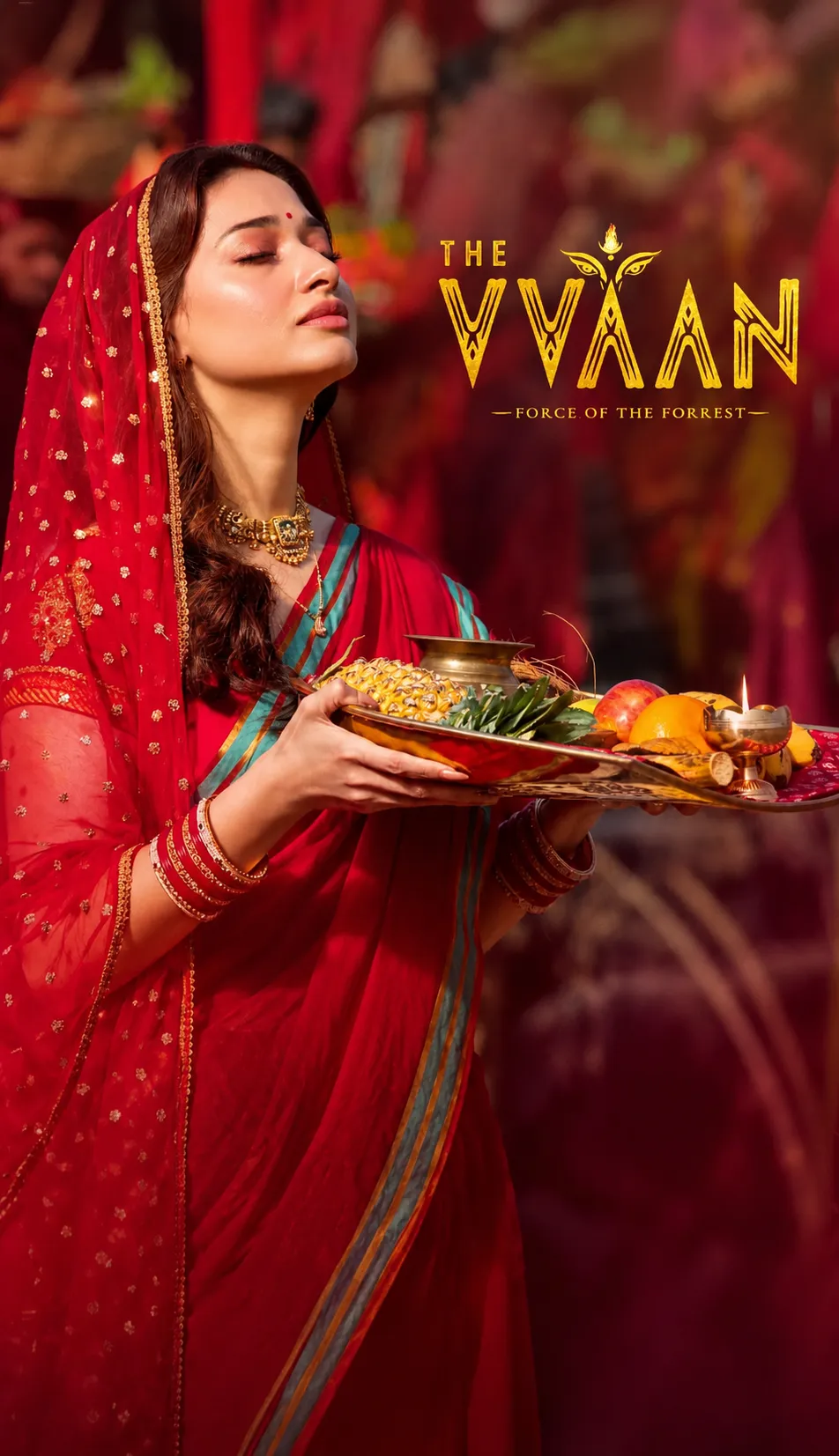
Tamannaah Bhatia brings the film’s most consistent emotional weight. Mamta’s longing and quiet strength give the story a human centre that the surrounding mythology sometimes threatens to overwhelm. In the stronger moments, her presence reminds the viewer what is genuinely at stake beyond the forest’s secrets.
The supporting cast, including Anup Soni, Sunil Grover, Shweta Tiwari and Maniesh Paul, populates the village with recognisable types—protectors of tradition, pragmatists eyeing opportunity, comic relief. Some of these characters serve the plot efficiently; others feel more like narrative functions than fully realised people.
Atmosphere Versus Execution
Visually and tonally, The Vvaan is most effective when it trusts suggestion. The forest settings, the rituals surrounding Chhath and the early hints of an unseen presence create a tangible sense of place. The film’s engagement with regional folklore and the decision to centre a festival rarely given sustained attention in mainstream Hindi cinema are genuine strengths.
Technical execution proves more variable. Visual effects range from serviceable to distracting, particularly once the story moves into overt supernatural confrontation. Pacing suffers in the second half as the film piles on incidents and explanations. What could have been an eerie, slow-burn unravelling becomes a noisier and less distinctive conflict.
Cultural Ambition and Missed Opportunities
There is real value in a mainstream film treating living folk traditions with seriousness rather than as exotic decoration. The Vvaan attempts to honour the protective power attributed to Van Devi and the community’s relationship with the land. At its best, it gestures toward questions about what is lost when development overrides belief, and how grief can make people either cling to or reject the sacred.
Yet the film rarely sits with those questions long enough. Instead of allowing atmosphere, character and gradual revelation to carry the mythology, it opts for accumulation. The result is a story that feels busy rather than deep. The richer ideas—about faith as both comfort and constraint, about ancestral responsibility, about the forest as memory—remain present but underdeveloped.
A Film Caught Between Intentions
The Vvaan is not without ambition or moments of genuine engagement. Its first half demonstrates that a folklore-driven thriller rooted in specific cultural soil can hold attention. The central couple’s history of loss provides an emotional entry point that elevates the material above pure genre exercise. Individual sequences, particularly those grounded in ritual and village life, show the film that might have been.
The difficulty lies in the screenplay’s reluctance to choose. By continually introducing new mythological and plot machinery, the film dilutes the very mystery and emotional clarity that made its premise compelling. The transition from suggestive folk tale to broader supernatural confrontation feels less like an organic escalation and more like a shift into a different, more conventional register.
Final Assessment
The Vvaan contains the ingredients of a distinctive folk thriller: a haunted landscape, a grieving couple, a living goddess, and the tension between modern ambition and inherited belief. Sidharth Malhotra and Tamannaah Bhatia commit to their roles, and the film’s cultural setting offers texture rarely prioritised in the genre. What it lacks is the discipline to let those strengths breathe.
Crowded plotting, uneven pacing and a second half that privileges escalation over atmosphere prevent the film from fully realising its potential. Viewers drawn to regional folklore and mythological storytelling may still find elements to appreciate. Those seeking a tightly controlled, emotionally resonant thriller are likely to feel the gap between the film’s ideas and their execution. In the end, The Vvaan remains a work of intriguing ambition that loses its way among the very myths it sets out to explore.
Read more – Dailymarathishayari.com