Saudi, Pakistan, Turkiye Affirm Defence Pact After Houthi Attacks
Top defence officials from Saudi Arabia, Pakistan and Turkiye have reaffirmed their commitment to collective defence under the Makkah Joint Defence Agreement following recent attacks by Yemen’s Houthi forces on Saudi targets. The high-level military consultations held in Riyadh underscore the three countries’ resolve to protect the security, sovereignty and territorial integrity of the Kingdom at a time of heightened regional tension.
The Riyadh Consultations
According to official statements, the chiefs of defence forces and chiefs of general staff of the three nations met in the Saudi capital to review the evolving security situation. The discussions focused on the threats facing Saudi Arabia and the practical steps required to strengthen coordinated responses. Participants strongly affirmed their adherence to the principle of collective defence and expressed clear support for Riyadh’s right to safeguard its territory and critical infrastructure.
The meeting also addressed attacks that had targeted civilian and economic facilities as well as areas associated with the holy city of Makkah. The officials conveyed their strong resentment at such actions and acknowledged the vigilance and professionalism displayed by Saudi forces in responding to the threats. Beyond immediate condemnation, the talks explored avenues for deeper practical cooperation, including enhanced intelligence sharing, improved military coordination and greater integration of defence capabilities.
The Makkah Joint Defence Agreement
The framework guiding these consultations is the Makkah Joint Defence Agreement signed by Saudi Arabia, Pakistan and Turkiye in August. The pact establishes a mutual-defence commitment under which an armed attack against any one of the three countries is to be regarded as an attack against all. It also provides for expanded defence cooperation, joint planning and measures aimed at strengthening collective deterrence.
The agreement represents a notable development in regional security architecture. It brings together a major Gulf power, a significant South Asian military with long-standing defence ties to the Kingdom, and a NATO member with growing strategic engagement in the broader Middle East. While the treaty contains language reminiscent of collective-defence clauses found in other alliances, its operationalisation remains a matter of political decision-making among the signatories.
Context of the Houthi Threat
The consultations took place against the backdrop of renewed Houthi attacks on Saudi interests. These strikes have included attempts to target infrastructure and have raised concerns about the security of religious sites and civilian areas. Saudi authorities have reported intercepting hostile drones and missiles, while the broader campaign has contributed to instability along critical maritime routes and heightened anxiety about energy and trade security.
For Riyadh, the ability to draw on formalised support from partners adds a layer of strategic reassurance. For Pakistan and Turkiye, participation signals solidarity with a key partner and an interest in contributing to stability in a region that affects global energy markets and the security of Muslim holy sites.
Signals of Commitment
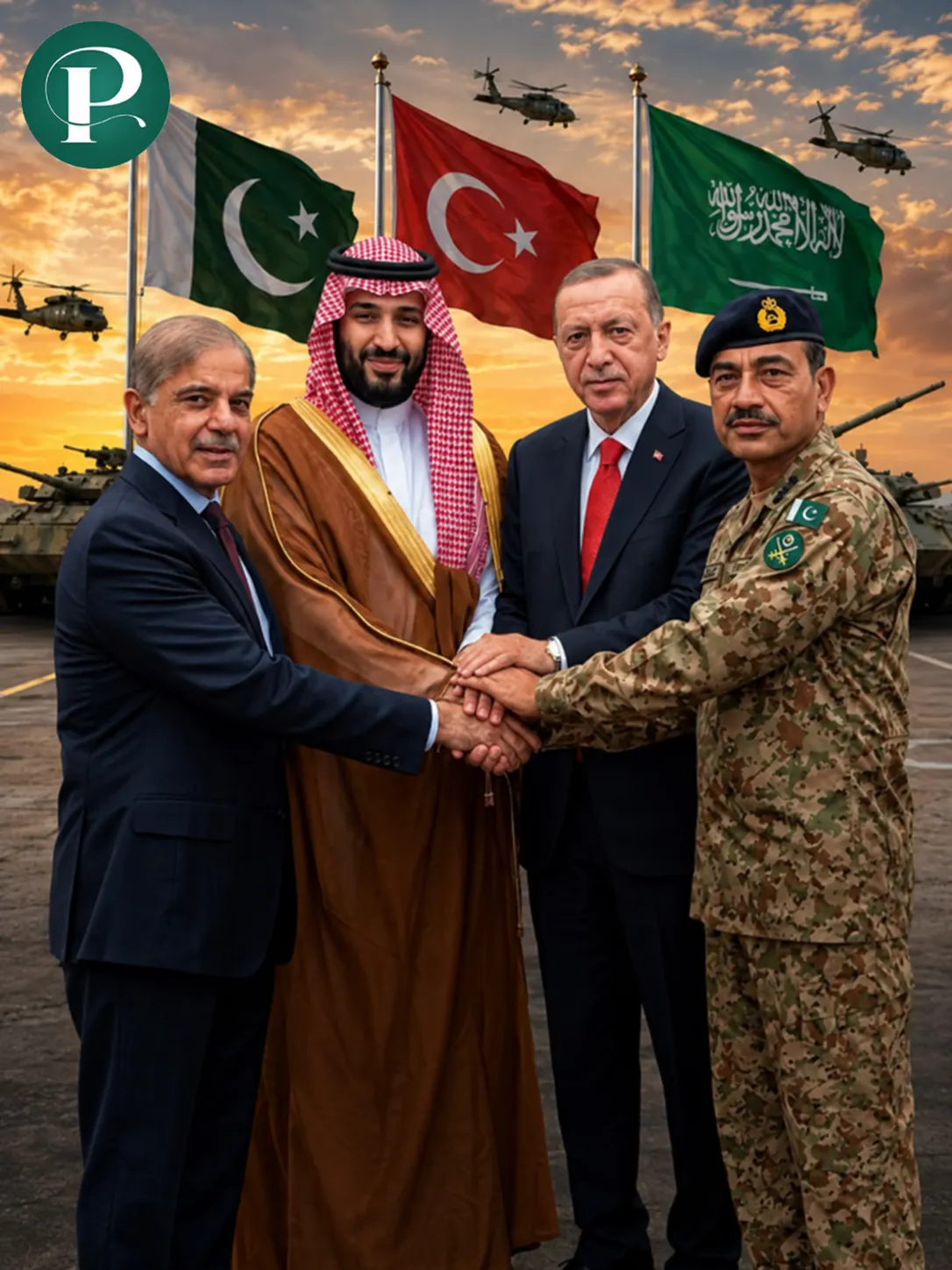
Public messaging from the Pakistani side in particular has emphasised the depth of the bilateral and trilateral commitment. Officials have spoken of readiness to support Saudi Arabia both diplomatically and, if required, physically, underscoring historical, religious and strategic bonds. Turkish engagement, meanwhile, aligns with Ankara’s broader efforts to expand its defence and diplomatic footprint. The joint appearance of the three military chiefs in Riyadh serves as a visible demonstration that the Makkah agreement is not merely symbolic.
At the same time, the precise nature of any future assistance remains subject to further consultation and national decision-making. Collective-defence pacts create expectations and frameworks; they do not automatically trigger identical responses in every contingency. The current emphasis on intelligence coordination, capability integration and joint assessment suggests a measured approach focused on preparedness and deterrence rather than immediate escalation.
Broader Regional Implications
The trilateral alignment adds complexity to an already intricate security landscape. Yemen’s conflict has long drawn in regional and international actors, and any strengthening of Saudi defensive partnerships is likely to be watched closely by other players. The involvement of Pakistan and Turkiye also illustrates how middle powers are increasingly willing to formalise security ties outside traditional alliance structures.
For the three countries themselves, the agreement and the follow-up military talks offer opportunities to deepen interoperability, share situational awareness and develop common approaches to emerging threats such as drone and missile attacks. Success will depend on sustained political will, effective military-to-military mechanisms and the ability to manage the inherent differences in the three armed forces’ doctrines, equipment and operational priorities.
Looking Ahead
The Riyadh meeting marks an early test of the Makkah Joint Defence Agreement’s relevance. By convening promptly after a spike in attacks and issuing a clear affirmation of collective resolve, the three partners have sought to demonstrate that the pact carries practical weight. Further steps—whether in the form of expanded intelligence exchanges, joint exercises, advisory support or other measures—will determine how the commitment translates into tangible security outcomes.
In a region where formal alliances have often been limited and where threats can escalate rapidly, the willingness of Saudi Arabia, Pakistan and Turkiye to institutionalise mutual defence represents a significant diplomatic and military development. The coming months will reveal the extent to which this framework can contribute to deterrence, crisis management and the protection of critical interests, including the security of one of Islam’s holiest cities and the stability of a pivotal Gulf state.
Read more – Penalcodedetail.com