Ladakh Arrives on Plates, in Drinks and Wardrobes Across India
Ladakh has long lived in the imagination as a distant high-altitude landscape of dramatic mountains, clear lakes and star-filled skies. In recent years the region has also drawn record numbers of visitors, driven by improved connectivity, new experiences such as India’s first high-altitude snow leopard safari, and major infrastructure projects. Yet the story is no longer limited to those who make the journey. Elements of Ladakh are now appearing on plates, in glasses and in wardrobes far from the Himalayas, turning a remote geography into a living part of contemporary Indian taste and style.
Tourist arrivals between January and September 2026 reached 4,60,667, a rise of more than 65 per cent compared with the same period the previous year and already higher than the full-year figure for 2025. September alone recorded a 60 per cent jump. These numbers reflect growing interest in the region’s natural and cultural heritage. At the same time, chefs, mixologists and designers are bringing Ladakhi ingredients and textiles into national conversation, allowing people across the country to encounter the region without boarding a flight.
From High-Altitude Kitchens to National Tables
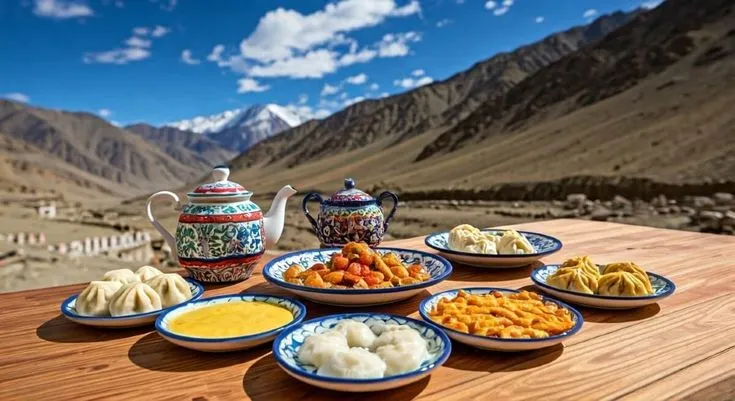
Ladakhi cuisine, shaped by extreme climate and limited resources, prizes barley, sea buckthorn, apricot, wild greens, yak products and hardy cheeses such as chhurpi. What was once understood mainly as regional mountain food is increasingly treated as a sophisticated culinary language. Chefs value its seasonal logic, resourcefulness and distinctive flavours.
Restaurant Naar, led by chef Prateek Sadhu, has become a notable example. Its menus draw on Himalayan cycles and incorporate Ladakhi elements as structural ingredients rather than decorative accents. Buckwheat pasta known as chutagi and the traditional fermented bread khambir appear as central components. Other kitchens experiment with apricot-based liqueurs and oils, sea buckthorn in juices or sauces, and foraged greens. The presence of Ladakhi preparations at a state banquet at Rashtrapati Bhavan has further signalled the cuisine’s rising status.
These ingredients carry practical and sensory appeal. Sea buckthorn, often called Leh berry, offers bright acidity and high nutritional value. Apricots, known locally as chulli, provide natural sweetness and aromatic depth suited to both savoury and sweet applications. Barley and buckwheat form the backbone of breads, pastas and porridges that feel both ancient and contemporary. As fine-dining and hospitality establishments seek distinctive, provenance-driven ingredients, Ladakh supplies a coherent mountain vocabulary that stands apart from more familiar coastal or plains cuisines.
Ingredients in the Glass
The same produce is moving into beverages. Sea buckthorn appears in juices, concentrates and experimental cocktails for its sharp, citrus-like character. Apricot finds expression in homemade liqueurs, syrups and infusions. These applications extend the region’s presence beyond solid food into the realm of drinks, allowing diners and bar-goers to taste Ladakh in a lighter, more social form.
The appeal lies partly in novelty and partly in authenticity. Ingredients grown at extreme altitudes under intense sunlight and cold nights develop concentrated flavours that are difficult to replicate elsewhere. When used thoughtfully, they bring a sense of place to the glass without requiring the drinker to travel.
Textiles Moving from Pasture to Runway
Parallel to the culinary shift, Ladakhi textiles are gaining visibility in fashion. Pashmina from the Changthang plateau, produced by Changra goats raised by pastoral communities, remains the region’s most celebrated fibre. Alongside it, local sheep wool known as nambu and other indigenous weaves are being interpreted for contemporary wardrobes.
At Lakmé Fashion Week in New Delhi, a dedicated stall showcased Pashmina shawls, handwoven textiles, embroidery and handicrafts created by artisans, weavers, spinners and women entrepreneurs. Designers from Ladakh, including those associated with labels such as Zilzom and Namza Couture, along with women-led enterprises Changra Ladakh and Charkha Ladakh, presented collections that blend traditional techniques with modern silhouettes. The presentation placed the makers and the landscape at the centre of the story rather than treating the region as mere exotic backdrop.
Geographical Indication recognition for several Ladakhi products, including forms of Pashmina textile, has strengthened provenance claims and market confidence. The fibre’s journey from high-altitude pastures to finished garments highlights both cultural continuity and economic opportunity for herders and craftspeople. Consumers increasingly value knowing the origin of materials and the communities behind them. Ladakhi textiles meet that desire while offering softness, warmth and distinctive character suited to both traditional and contemporary clothing.
A Wider Cultural Presence
The simultaneous appearance of Ladakhi food, drink ingredients and textiles reflects a broader pattern. Improved infrastructure and rising tourism have made the region more accessible, while chefs, designers and entrepreneurs have translated its resources into forms that travel easily. The result is that people who may never visit the high passes or crystal lakes can still experience aspects of Ladakh through a meal, a cocktail or a garment.
This movement does not replace the value of travel itself. Standing beneath Ladakh’s vast sky or watching a snow leopard landscape remains irreplaceable. Yet the diffusion of its ingredients and crafts creates secondary pathways of connection. It also supports local livelihoods by expanding markets for produce and handicrafts beyond seasonal visitors.
Taste, Craft and Continuity
Ladakh’s growing presence on plates, in glasses and in wardrobes rests on tangible qualities: concentrated flavours born of altitude and climate, fibres refined by generations of pastoral knowledge, and a culinary logic of resourcefulness. These elements are now being recognised and reinterpreted by practitioners outside the region.
As tourist numbers continue to rise and new experiences such as high-altitude wildlife safaris take shape, the parallel story of cultural and material exchange gains equal importance. Ladakh is no longer only a destination. Through barley and apricot, sea buckthorn and Pashmina, through breads, pastas, juices and finely woven textiles, it has begun to arrive in everyday Indian life—quietly, flavourfully and with unmistakable character.
Read more – Lpainhand.com